Introduction
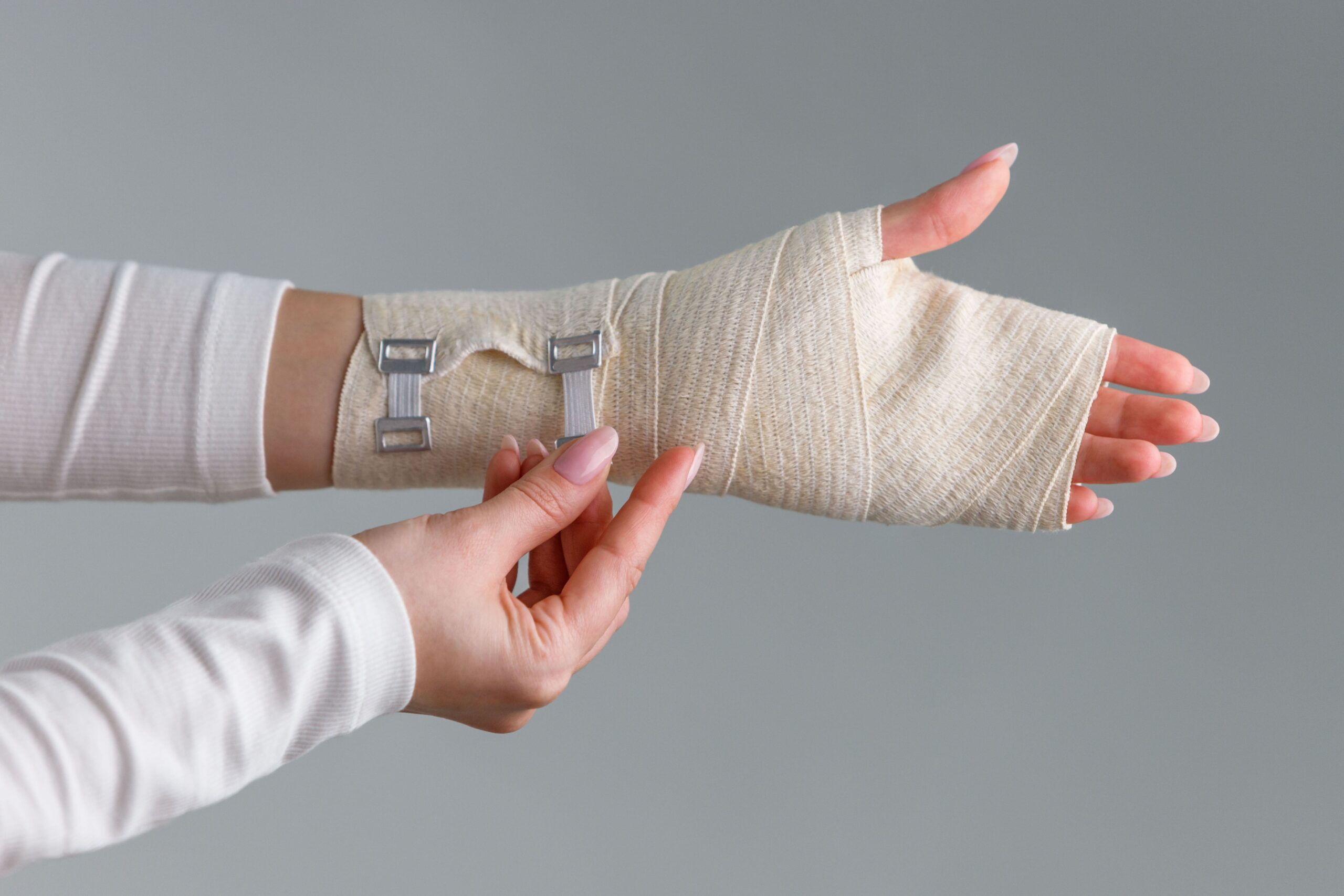
Can a broken wrist heal without surgery? Conservative management using splints and casts successfully treats many distal radius fractures without surgical intervention, particularly when bone fragments maintain acceptable alignment with less than 2mm of articular step-off, radial shortening under 5mm, and dorsal angulation below 10 degrees. These fractures occur when the radius bone breaks near the wrist joint, typically within 2.5 cm of the articular surface.
The choice between splinting and casting depends on fracture pattern, swelling severity, and healing stage. Initial splinting accommodates post-injury swelling while providing fracture stability. Definitive casting follows once swelling subsides, usually within 3-7 days. Treatment duration typically spans 6-8 weeks, with regular radiographic monitoring to ensure maintained alignment.
Initial Splinting Techniques
Sugar tong splints provide immobilisation for acute distal radius fractures by preventing forearm rotation and wrist movement. The splint extends from the metacarpal heads dorsally, around the elbow at 90 degrees flexion, to the palmar metacarpal heads. This configuration maintains the fracture reduction while accommodating swelling that peaks 48-72 hours post-injury.
Volar slab splints offer an alternative when forearm rotation control isn’t necessary. These extend from just below the elbow along the volar forearm to the proximal palmar crease, maintaining the wrist in 15 degrees of extension. The thumb remains free for opposition, reducing stiffness risk during the acute phase.
Proper splint application requires:
- 10-12 layers of plaster or fibreglass
- Adequate padding over bony prominences
- Maintenance of the wrist in functional position
- MCP joints should flex freely to 90 degrees, while the splint prevents wrist and forearm movement
- Cotton padding thickness should measure 2-3 layers circumferentially, with extra padding at the elbow and ulnar styloid
Splint complications include:
- Pressure sores
- Compartment syndrome from tight application
- Loss of reduction from inadequate immobilisation
Daily finger movement exercises prevent stiffness, while elevation above heart level for the first 72 hours minimises swelling.
Casting Protocols and Timing
Conversion from splint to cast occurs once soft tissue swelling resolves, typically between days 3-7 post-injury. Short arm casts suffice for stable, extra-articular fractures with minimal comminution. The cast extends from below the elbow to the proximal palmar crease, allowing full elbow motion while immobilising the wrist.
Long arm casts control forearm rotation in unstable fracture patterns or those with radioulnar joint involvement. These extend above the elbow with 90-degree flexion and neutral forearm rotation. After 3-4 weeks, many patients transition to short arm casts once early healing provides inherent stability.
Cast moulding maintains fracture reduction through three-point pressure application. For dorsally angulated fractures, pressure applies volarly at the fracture site, with counterpressure dorsally at the hand and proximal forearm. The interosseous mold between the radius and ulna prevents rotation while maintaining anatomic spacing.
Cast index measurements predict maintenance of reduction. The ratio of sagittal to coronal width at the fracture site should exceed 0.7. Lower ratios indicate inadequate moulding and increased risk of displacement. Weekly radiographs during the first three weeks detect early loss of reduction requiring intervention.
Monitoring Fracture Healing
Radiographic assessment follows specific intervals: immediately post-reduction, at 1 week, 2 weeks, 3 weeks, and 6 weeks. Acceptable alignment parameters include radial height of 11-12mm, radial inclination of 22-23 degrees, and volar tilt of 11-12 degrees. Loss of reduction beyond these parameters may indicate surgical intervention.
Clinical healing signs precede radiographic union. Absence of tenderness at the fracture site typically develops by week 4-6. Radiographic healing shows bridging callus across three of four cortices, usually visible by weeks 6-8. Trabecular continuity across the fracture site confirms complete union.
Early mobilisation protocols begin with cast removal at 6 weeks for stable fractures. Removable wrist splints provide comfort during the transition period, worn primarily during strenuous activities. Some patients with osteoporotic bone or comminuted fractures require 8 weeks of immobilisation for healing.
Delayed union occurs when healing extends beyond 3 months without complete consolidation. Contributing factors include poor initial reduction, inadequate immobilisation, and patient non-compliance with weight-bearing restrictions. Bone stimulators may accelerate healing in selected cases showing delayed progression.
Rehabilitation During Conservative Treatment
Immediate finger mobilisation prevents tendon adhesions and joint stiffness. Patients perform full fist formation, finger extension, and thumb opposition exercises hourly while awake. Intrinsic plus positioning during exercises maintains MCP flexion with IP extension, preventing intrinsic tightness.
Shoulder and elbow exercises maintain proximal joint mobility throughout immobilisation. Shoulder pendulum exercises, flexion, and abduction prevent adhesive capsulitis. Elbow flexion-extension exercises in short arm casts maintain range of motion. These exercises are performed regularly throughout the day.
Post-cast rehabilitation focuses on wrist mobility and strengthening. Active wrist flexion-extension and radial-ulnar deviation begin immediately after cast removal. Passive stretching starts once active motion plateaus, typically 2 weeks post-cast removal. Grip strengthening using therapy putty progresses from soft to firm resistance over several weeks.
Functional activities guide rehabilitation progression. Light daily activities resume post-cast removal immediately. Lifting restrictions continues for several weeks. Return to sports or heavy manual work requires adequate time for healing, with full strength recovery taking several months.
Complications and Management Strategies
Malunion represents the most frequent complication of conservative treatment, occurring when fractures heal in a suboptimal position. Dorsal malunion exceeding 20 degrees causes midcarpal instability and altered load transmission. Radial shortening over 5mm disrupts the distal radioulnar joint mechanics, limiting forearm rotation.
Complex regional pain syndrome develops in some patients, characterised by disproportionate pain, swelling, and vasomotor changes. Early recognition and appropriate therapy prevent permanent dysfunction. Treatment combines physical therapy, contrast baths, and occasionally stellate ganglion blocks.
Median nerve compression occurs from acute carpal tunnel syndrome or direct trauma. Acute symptoms within hours of injury require immediate surgical release. Chronic compression developing during healing responds to activity modification and night splinting in many cases.
Extensor pollicis longus rupture occurs weeks to months post-fracture from ischemia at Lister’s tubercle. Sudden loss of thumb IP extension indicates rupture requiring tendon reconstruction or transfer—early recognition of tendon irritation with crepitus over Lister’s tubercle prompts prophylactic release.
💡 Did You Know?
The distal radius bears most of the axial load across the wrist joint, while the triangular fibrocartilage complex and ulna support the remaining load. This load distribution changes with forearm rotation and ulnar variance alterations from fracture healing.
What Our Hand Specialist Says
Conservative management succeeds in properly selected patients when reduction parameters meet acceptable criteria and remain stable throughout healing. Patient compliance significantly impacts outcomes. Those who perform prescribed exercises, attend follow-up appointments, and protect the healing fracture achieve functional results comparable to surgical treatment in appropriate cases.
Young adults with high functional demands may benefit from surgery even with acceptable radiographic parameters, as anatomic restoration optimises long-term outcomes. Conversely, elderly patients with lower demands often achieve satisfactory function despite minor malunion, making conservative treatment preferable.
Putting This Into Practice
- Perform hourly finger exercises during immobilisation, focusing on full composite fist formation and individual finger flexion to prevent tendon adhesions.
- Maintain elevation above heart level for the first 72 hours, using pillows to support the entire arm while sleeping.
- Monitor for warning signs of complications, including increasing pain despite medication, numbness or tingling in fingers, or inability to move fingers freely.
- Schedule radiographs at prescribed intervals, even if symptoms improve, as loss of reduction can occur without symptoms
- Begin gentle wrist mobilisation immediately after cast removal, performing flexion-extension exercises in warm water to reduce stiffness.
Commonly Asked Questions
How long before I can drive after cast removal?
Driving safely requires adequate grip strength and reaction time, typically achieved 2-4 weeks after cast removal. Manual transmission vehicles require longer recovery periods.
Will my wrist return to normal strength?
Grip strength recovers gradually over several months. Most patients achieve functional strength for daily activities within 3 months. Dominant hand injuries may show slightly better recovery due to increased use during rehabilitation.
Can I prevent stiffness during casting?
Regular finger and shoulder exercises throughout immobilisation minimise stiffness. Keeping fingers warm and moving them frequently maintains tendon gliding. Post-cast stiffness resolves faster when exercises begin immediately after cast removal rather than waiting for comfort.
Why does my wrist still hurt after the cast comes off?
Ligament and cartilage healing continue 6-12 weeks beyond bone union. Joint stiffness from immobilisation causes discomfort with initial movement. Pain gradually decreases with progressive activity, though weather-related aching may persist for several months.
What activities should I avoid after healing?
High-impact activities and maximum weight bearing should wait 12 weeks minimum. Contact sports require protective splinting for an additional 4-6 weeks. Repetitive heavy lifting or vibration tool use may cause long-term discomfort even after complete healing.

Don't Let Hand Pain Affect Your Life
Restore Function and Improve Your Quality of Life
Our clinic provides a comprehensive, one-stop service for diagnosis and treatment.
Make An Enquiry
Don't Let Hand Pain Affect Your Life
Restore Function and Improve Your Quality of Life
Our clinic provides a comprehensive, one-stop service for diagnosis and treatment.
Make An EnquiryConclusion
Conservative management of distal radius fractures succeeds when proper splinting and casting techniques maintain acceptable alignment throughout the 6-8 week healing period. Regular radiographic monitoring detects early complications, while immediate finger mobilisation prevents stiffness. Post-cast rehabilitation, beginning with active wrist exercises and progressive strengthening, restores functional outcomes comparable to surgical treatment in appropriately selected patients.
If you are experiencing wrist pain, swelling, or limited motion following an injury, consult an orthopaedic hand specialist for proper evaluation and treatment recommendations.