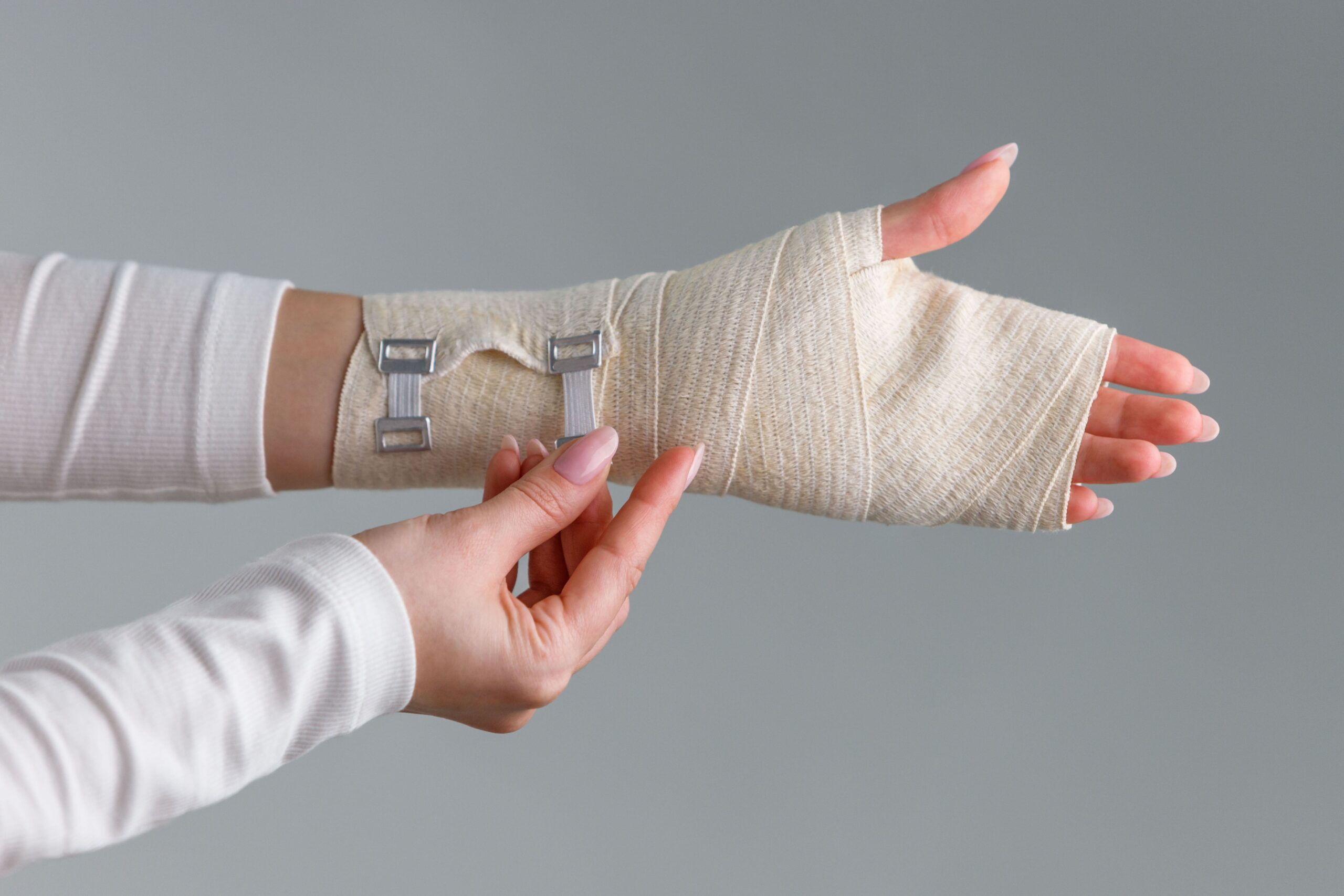
The ulnar nerve lies relatively close to the skin at the inner elbow, with minimal surrounding padding, making it highly vulnerable to external pressure. When this nerve becomes compressed or stretched within the cubital tunnel, intermittent numbness and tingling can develop in the ring and little fingers, a pattern distinct from carpal tunnel syndrome, which typically affects the thumb, index, and middle fingers.
The ulnar nerve handles essential signals for various fine motor movements in the hand, including finger spreading, pinch coordination, and the small muscles involved in maintaining a precise grip. Compression at the elbow can disrupt nerve signalling along these pathways, which helps explain why symptoms often manifest in the hand even though the primary mechanical compression originates higher up the arm.
Anatomy of the Cubital Tunnel
The cubital tunnel is located behind the bony prominence on the inner elbow known as the medial epicondyle (commonly referred to as the “funny bone”). The tunnel’s roof consists of a tissue band that typically stretches when the elbow bends, which can reduce the available volume within the tunnel and increase baseline pressure on the nerve.
During elbow flexion, the ulnar nerve naturally elongates and flattens. Bending the elbow past 90 degrees may significantly elevate pressure within the tunnel environment. This positional stress helps explain why symptoms frequently become more pronounced during sleep, when individuals often unconsciously curl their arm, or during activities requiring prolonged elbow flexion, such as talking on a phone or working at a computer.
Because of the nerve’s superficial placement, it is vulnerable to direct external contact. Habitually leaning on armrests, resting the elbows against hard surfaces, or sustaining a direct impact to the inner elbow can all trigger transient or ongoing symptoms.
Recognising Cubital Tunnel Symptoms
Numbness and tingling in the ring and little fingers typically appear first, often described as a sensation of the fingers “falling asleep.” These symptoms frequently begin intermittently during specific activities or upon waking, then can progress to more constant sensory changes if the underlying compression continues.
Sensory Changes
The ulnar nerve supplies sensation to the little finger and half of the ring finger. Patients often report that these digits feel numb or display an altered capacity to distinguish hot from cold surfaces. Some individuals describe a persistent pins-and-needles sensation or localised hypersensitivity to light touch.
Motor Weakness
As nerve compression progresses, weakness can develop within the hand’s intrinsic muscles. Common signs may include:
- Difficulty spreading the fingers apart against resistance
- Reduced pinch strength between the thumb and index finger
- Difficulty with fine motor tasks such as buttoning shirts or turning keys
- Mild clumsiness when typing or playing musical instruments
Advanced Signs
Prolonged, unmanaged compression can lead to visible muscle wasting in the hand, particularly within the web space between the thumb and index finger and along the outer edge of the palm. In some advanced cases, the ring and little fingers can develop an altered posture where the knuckles hyperextend while the middle finger joints remain bent.
Common Causes and Risk Factors
Direct pressure on the nerve occurs with habits like leaning on elbows while reading, extended driving with arms resting on door frames, or sleeping with elbows tightly bent. Occupational factors include jobs requiring repetitive elbow flexion, prolonged gripping of tools, or operating vibrating equipment.
Anatomical Variations
Some individuals have a nerve that naturally shifts out of its groove during elbow bending, creating friction and irritation with repetitive movement. Previous elbow fractures, particularly in childhood, can alter the tunnel’s shape and predispose to later compression. Bone spurs from arthritis narrow the available space for the nerve.
Medical Conditions
Diabetes can be a risk factor for nerve compression injuries. Inflammatory conditions causing joint swelling can reduce tunnel volume. Fluid retention during pregnancy sometimes triggers temporary symptoms.
Did You Know?
The ulnar nerve controls the muscles that allow you to cross your fingers, a movement requiring coordination between intrinsic hand muscles that this single nerve supplies.
Diagnostic Evaluation
Clinical examination begins with testing sensation in the ulnar nerve distribution and assessing muscle strength in nerve-dependent muscles. Tapping over the cubital tunnel may reproduce tingling in the ring and little fingers (Tinel’s sign). Holding the elbow in full flexion for 60 seconds often triggers or worsens symptoms.
Nerve Conduction Studies
Electrodiagnostic testing measures how quickly and completely electrical signals travel through the nerve. Slowing of conduction velocity across the elbow segment confirms compression at the cubital tunnel and quantifies severity. These studies also rule out other sites of compression or generalised nerve conditions.
Imaging Studies
X-rays reveal bone spurs, previous fracture deformity, or arthritis affecting the elbow. Ultrasound can visualise nerve swelling, subluxation, and surrounding soft tissue abnormalities. MRI provides detailed images when masses or other structural abnormalities require evaluation.
Cubital Tunnel Syndrome Treatment Options
Treatment selection generally depends on symptom duration, the estimated severity of nerve dysfunction, and whether muscle weakness is present. Early intervention with activity modification and conservative protocols frequently achieves favourable results when symptoms remain intermittent.
Conservative Management
Activity modification forms the foundation of non-surgical management. Avoiding prolonged elbow flexion, utilising hands-free devices instead of holding phones to the ear, and keeping the arms tracking straighter during sleep can help minimise nerve irritation. Elbow splints worn at night are often recommended to prevent involuntary bending during sleep.
Workstation adjustments can also support recovery: positioning keyboards to allow a relaxed elbow angle, utilising padded armrests, and taking regular breaks from repetitive tasks. Avoiding direct pressure on hard surfaces helps shield the nerve during daily routines.
When Conservative Treatment Fails
Surgical alternatives may be considered when symptoms persist despite several months of conservative management, when muscle weakness develops, or when nerve conduction studies document significant conduction slowing. Prolonged delay in evaluation can increase the risk of long-term nerve damage and progressive muscle changes.
Surgical Approaches
- Simple Decompression: This procedure aims to release the ligament forming the tunnel’s roof, with the goal of providing the nerve with more space. This approach is typically considered for patients without nerve subluxation and preserves the native anatomy.
- Anterior Transposition: This approach involves moving the ulnar nerve from its position behind the medial epicondyle to a location in front of it, aiming to remove it from the zone of mechanical stretch and compression. The nerve may be relocated beneath the skin layer, within the muscle, or deeper underneath the muscle tissue.
- Medial Epicondylectomy: This technique involves removing a small portion of the bony prominence to widen the tunnel pathway without migrating the nerve.
The selection between these surgical techniques depends on individual joint anatomy, the underlying cause of the compression, and the specialist’s clinical assessment.
Recovery After Surgery
Most cubital tunnel procedures are performed as outpatient day surgeries utilising regional or general anaesthesia. Post-operative protocols vary based on the specific surgical technique employed. Simple decompression typically permits early movement, while transposition procedures may include a brief period of splinting to protect the relocated nerve.
Individual nerve recovery generally follows a gradual course: local surgical discomfort commonly becomes manageable over a few weeks, while numbness and tingling may require several months to gradually change. Because nerve fibres heal progressively over time, symptoms in the hand generally require an extended recovery runway as the pathway heals from the elbow down to the fingertips.
Hand therapy can be highly valuable to help restore grip strength and fine motor coordination. Personalised scar management, progressive range-of-motion exercises, and a gradual return to daily activities follow structured clinical guidelines.
A Note on Cubital Tunnel Syndrome Treatment
Timing matters considerably in cubital tunnel syndrome treatment. Patients who present with intermittent numbness and normal strength may respond to activity modification and nighttime splinting. Those presenting with established weakness face longer recovery and may not regain full function. When conservative measures provide incomplete relief after two to three months, surgical consultation helps determine whether intervention would prevent progression.
Protecting Your Ulnar Nerve
- Maintain neutral elbow positions during prolonged activities, and keep elbows at or below 90 degrees when working at a desk or computer.
- Use a rolled towel or commercial elbow pad at night to prevent full elbow flexion during sleep.
- Pad hard surfaces where you rest your elbows, or break the habit of leaning on them entirely.
- Take regular breaks during repetitive tasks, straightening and gently moving the elbow through its full range.
- Position yourself to avoid direct pressure on the inner elbow when seated for extended periods.
When to Seek Professional Help
- Numbness in the ring and little fingers lasting more than several days
- Tingling that wakes you from sleep or persists after changing position
- Weakness when pinching, gripping, or spreading fingers
- Visible muscle wasting between the thumb and index finger
- Dropping objects or difficulty with fine motor tasks
- Symptoms that have progressively worsened over weeks to months
Commonly Asked Questions
How is cubital tunnel syndrome different from carpal tunnel syndrome?
Cubital tunnel syndrome affects the ulnar nerve at the elbow, causing symptoms in the ring and little fingers. Carpal tunnel syndrome compresses the median nerve at the wrist, producing numbness in the thumb, index, and middle fingers, and the half of the ring finger. The conditions require different treatments targeting their respective compression sites.
Can cubital tunnel syndrome heal on its own?
Mild cases triggered by specific activities may resolve with behaviour modification, and stopping the aggravating activity allows the nerve to recover. However, symptoms present for extended periods or accompanied by weakness typically require structured treatment and monitoring to prevent permanent nerve damage.
How long does recovery from cubital tunnel surgery take?
Initial surgical site healing is commonly seen within several weeks. Nerve recovery continues over months, with sensory improvements frequently preceding strength gains. Complete recovery parameters depend heavily on the degree of pre-operative nerve damage; individuals with mild compression often see more straightforward progress than those with long-standing weakness.
Will I regain full feeling after treatment?
Outcomes depend on how long and how severely the nerve was compressed before treatment. Early intervention when symptoms are purely sensory may result in complete resolution. Patients with muscle weakness may experience incomplete recovery despite successful surgery.
What happens if cubital tunnel syndrome is left untreated?
Progressive compression leads to worsening numbness, increasing weakness, and eventually permanent muscle wasting in the hand. The characteristic clawed posture of the ring and little fingers becomes fixed. Lost function may not return even with delayed surgery, making timely evaluation advisable.
Next Steps
Nighttime elbow splinting and workstation modifications represent common initial responses to mild or intermittent ulnar nerve symptoms. When numbness in the ring and little fingers persists beyond two to three months, or if any noticeable grip weakness develops, scheduling electrodiagnostic testing or a formal medical assessment is appropriate.
Managing nerve compression before advanced structural muscle changes occur can support a more predictable recovery trajectory.
If you are experiencing ongoing numbness or tingling in your ring and little fingers, variations in your grip strength, or localised changes in your hand musculature, consulting a hand surgeon in Singapore can provide a comprehensive evaluation and help you safely explore your treatment options.